Earlier this summer, Robinhood announced a promo for earning 7% APY on USDG, which they have committed to for one year.
But what makes this promo even more interesting is a discrepancy between the market-hours-based schedule of Robinhood's margin interest computation and the 24/7 availability of cryptocurrency trading.
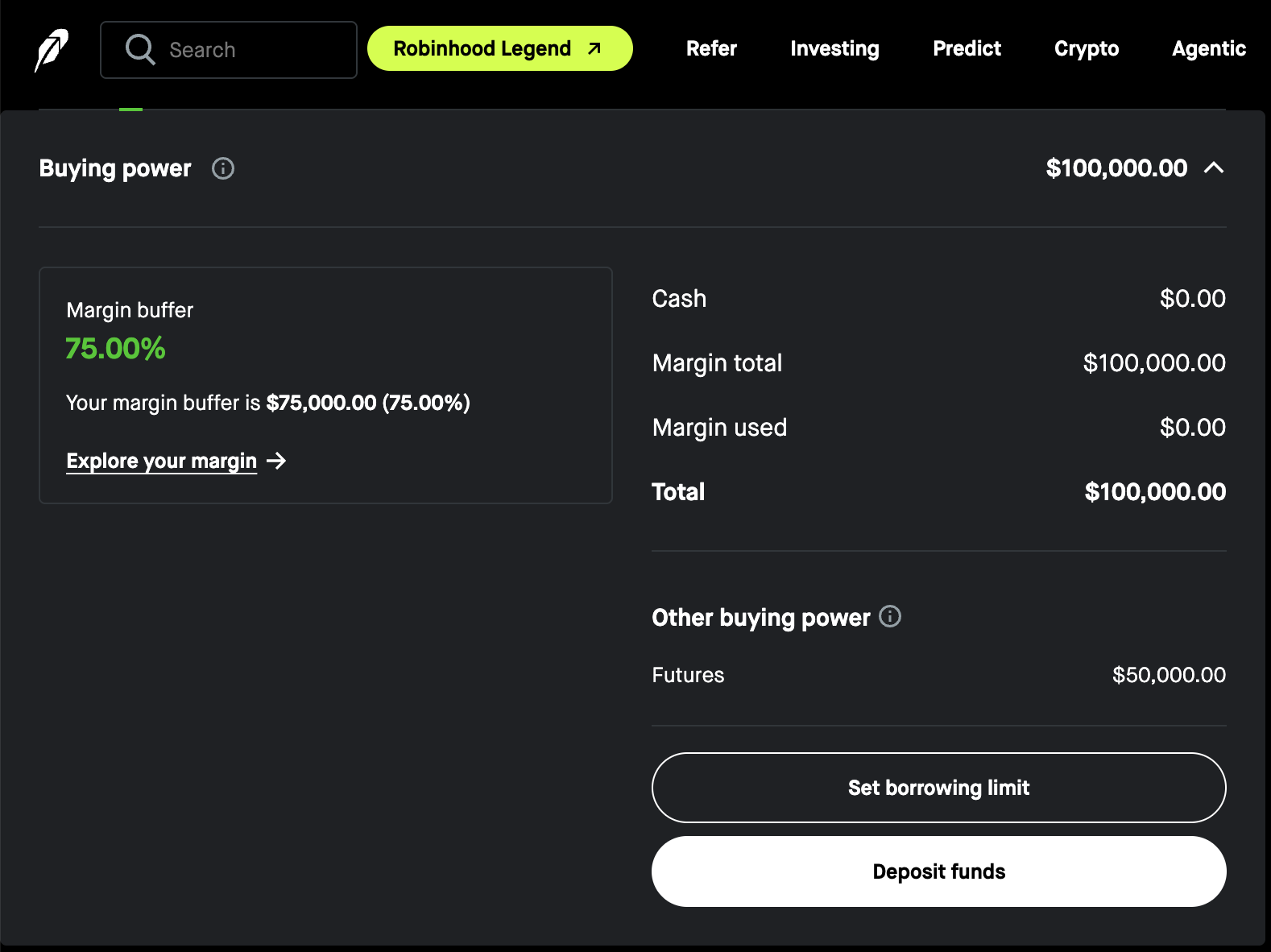
The margin computation
For billing purposes, Robinhood calculates the margin balance as a snapshot at the end of each extended-hours trading day, typically 8:00 PM ET. On days when the stock market is closed, the snapshot is based on the last trading day.
The loophole
In contrast to market-traded securities, cryptocurrencies can be purchased on Robinhood any time. So if one buys USDG on margin at 8:00 PM right after the end of trading day one and then sells it at 7:59 PM right before the close of trading day two, they earn interest on money borrowed at no cost.
The liability, of course, is still the borrower's. So if you wouldn't touch stablecoin lending with a ten foot pole to begin with, the risk-reward profile might still not be for you. 1
An example
The juice is particularly worth the squeeze over weekends. In this example, let's say you have a margin investing account with Robinhood with a value of $100,000. Robinhood typically offers up to 50% of the value of your assets on margin, in which case you have $50k in margin available. Each weekend you can execute the following:
- Friday at 8:00 PM ET: Buy $50,000 of USDG using your account's margin balance. Lend the USDG available as part of Robinhood's program to earn 7% continuous interest.
- Monday at 7:59 PM ET: Revoke and sell your USDG for $50,000. Your margin balance is back to zero before the next snapshot, and you've now earned interest on $50,000 of effectively free money for three full days.
The upshot: 3.5% extra account-wide yield
To earn interest during weekdays as well, one may continue to purchase after the close of each trading day and sell before the close of the next one. In this way, you almost continuously earn 7% on your margin balance, while paying no interest—or, in other words, with a 50% margin balance, an additional 3.5% on the total value of your account.
A word of warning
Robinhood has a reputation for closing accounts at its discretion. If that would create a major headache for you—for example, if liquidating your positions would create a tax burden or freezing them would deprive you of needed funds—then tread lightly.
But for those with assets that were just sitting there, or who simply wanted to know more about the timing of margin interest computations, it's good to know.
To whom is the USDG lent? It is lent here on the Morpho platform.
My understanding is that borrowers use it to take leveraged positions in cryptocurrencies, using these or other cryptocurrencies as collateral (analogously to how one might take leveraged positions using margin on a brokerage platform such as Robinhood, with these and other securities being used as collateral).
The primary risk in this system, as I understand it, is of a flash crash in the collateral cryptocurrencies to the extent that they cannot be liquidated fast enough to cover the borrowed amount.
To cover the gap between the Morpho rate and the promotional earn rate, Robinhood may also be earning incentives from Paxos, the issuer of USDG, who earns interest on its reserves, for driving adoption of USDG.↩