We get these requests all the time: emails spamming us to "rate our recent experience"; oddly timed pop-up boxes imploring you to "leave a rating before you go"; customer service specialists asking us to "please stay on the line for a brief survey after the call."
The irony is that the areas where companies need our feedback the most are precisely where they understand what is happening the least. Even leaving aside the structural limitations of surveys — severe selection bias, clunky questions, the incentive for superficial answers — how can a company know where and how to insert a survey to surface a problem they didn't even know existed?
Case study #1: Citi Strata Elite's credit card fiasco
In September of 2025, Citibank bungled the rollout of their new premium credit card, the Citi Strata Elite. Almost immediately after approval, scores of applicants found their accounts abruptly frozen. The bank began retroactively demanding IRS tax transcripts (Form 4506-C), leaving cardholders stranded in administrative limbo—unable to make purchases or hit the spend threshold required for their 100,000-point welcome bonus.
It took a WSJ article to get Citi to realize what it was doing and the PR firestorm it had created. The response to the article was immediate: 48 hours after the piece was published, Citi waived the $595 annual fee and unconditionally credited the 100,000 points to affected cardholders.
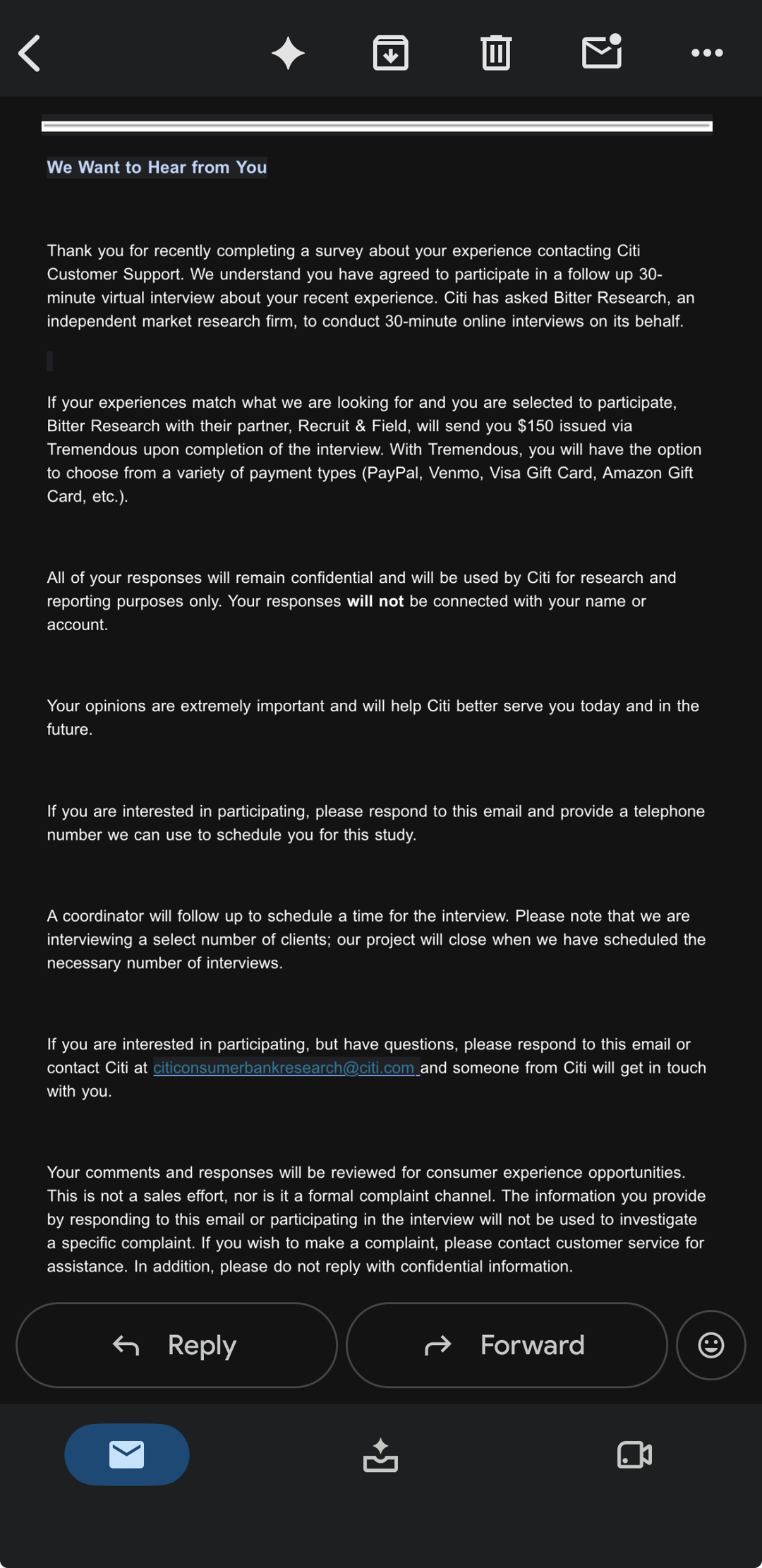
Ironically, many weeks earlier, around the same time the issue began, Citibank reached out to me offering $150 for 30 minutes to speak about my experience signing up for the card. There was no indication this was response to the incident or outcry that had already started.
The woman I ended up speaking with was from an agency, likely far removed from the people actually calling the shots, dutifully logging my gripes about the ongoing debacle without any apparent awareness that it was unfolding nationwide. This, despite the fact that a quick Google search would have revealed frantic complaints all over Reddit and various forums.
Case study #2: Webster Bank onboarding survey's insult to my injury
Recently, I experienced another prime example of the disconnect between common survey methods and companies' ability to surface and rectify bad user experience.
This particular saga was an attempt at opening a new account with Webster Bank. Of all the bad bank tech I have encountered, this bank has truly one of the worst—the ability to simply make an online transfer feels like a feature still in early development.
On top of this sub-standard tech, they repeatedly blocked my ability to fund the new account. Customer service first led me astray, telling me they had resolved automated block, and then when it turned out to be incorrect, told me dully there was nothing they could do.
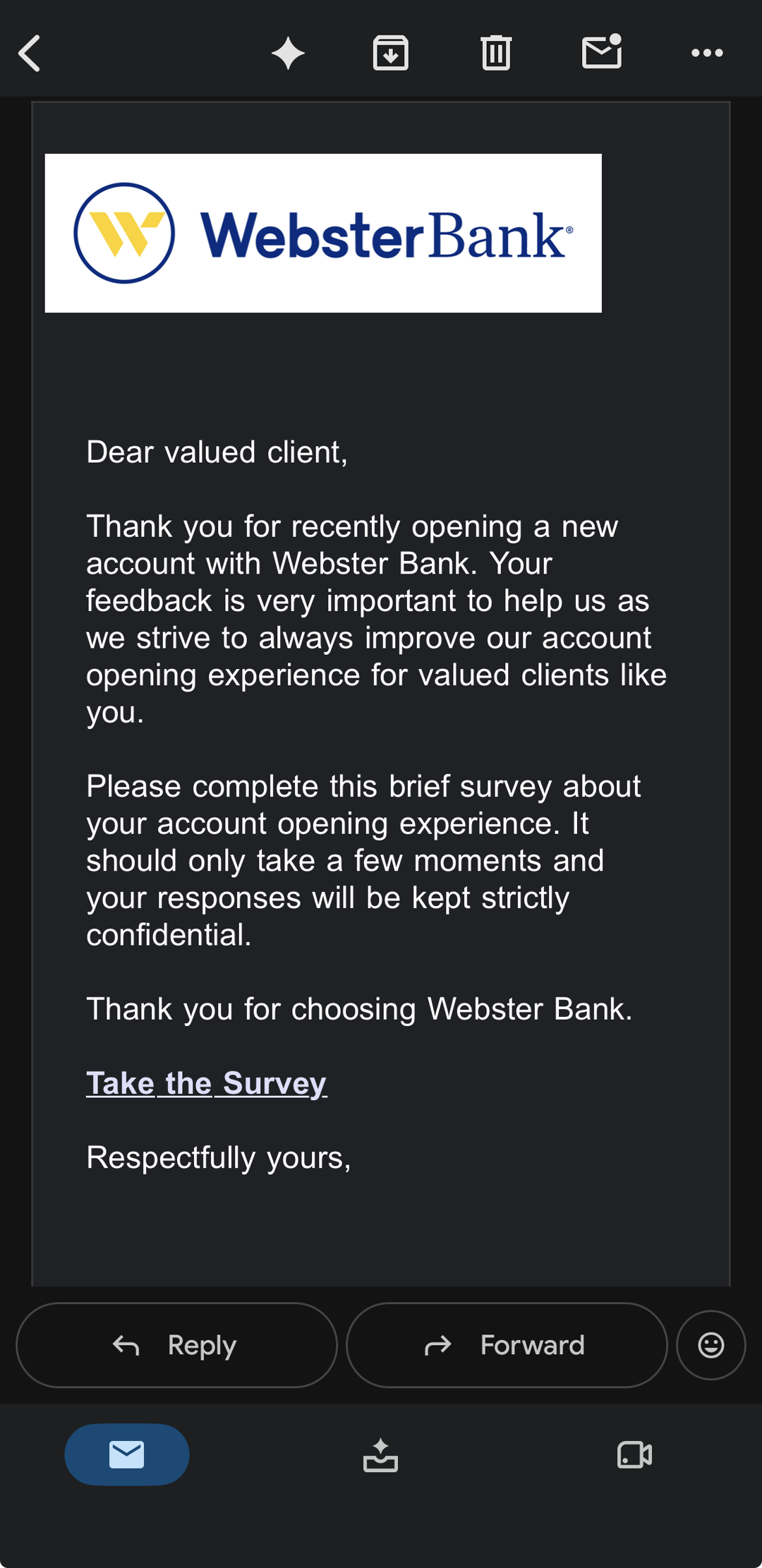
And at the end of all this, what do I receive? An email politely asking me to "provide feedback." What modicum of faith I had left was instantly squandered when the form refused to let me submit a rating of my experience without filling out several additional pages detailing that experience—a journey on which, at that point, I was entirely unwilling to continue.
Towards a better solution: crowdsourcing proactive feedback
Back when software was designed and maintained with scarce engineering hours, it was understandable—if frustrating—that so many points of failure fell through the cracks. But there is reason for optimism.
The emergence of technically-capable AI means that repairing broken systems is no longer prohibitively expensive or reserved for the few with intimate domain knowledge. The real bottleneck today is simply bringing those pain points to light.
With the cost of resolving technical friction lower than ever and the bar for human ownership conversely higher, let us hope our voices may be actually heard.